Foundational essay • June 2020
The Case for August as Freedom Month
By C. D. Ford • Edited for clarity and historical accuracy
August holds an exceptional place in the history of freedom across the African diaspora. It connects the arrival of the first recorded Africans in English North America, emancipation across much of the British Empire, landmark civil-rights victories, and modern acts of remembrance. Black History Month is observed in February in Canada and the United States and in October in the United Kingdom, yet neither month holds the defining moments of emancipation. August does. Recognizing August as Freedom Month gives the African diaspora on every side of the Atlantic one shared period, rooted in that history, for remembrance, education, celebration and community action.
A shared history across borders
Black history is observed in different months in Canada, the United States and the United Kingdom. Yet the history itself crosses borders. The transatlantic slave trade connected Africa, the Caribbean, Britain, Canada and the United States through violence and displacement. The long struggle against slavery also connected these places through resistance, legislation, abolition movements and the search for refuge.
Freedom Month offers a constructive way to understand this shared inheritance. It invites descendants of the African diaspora and their allies to remember the past while building stronger relationships in the present.
Point Comfort and the year 1619
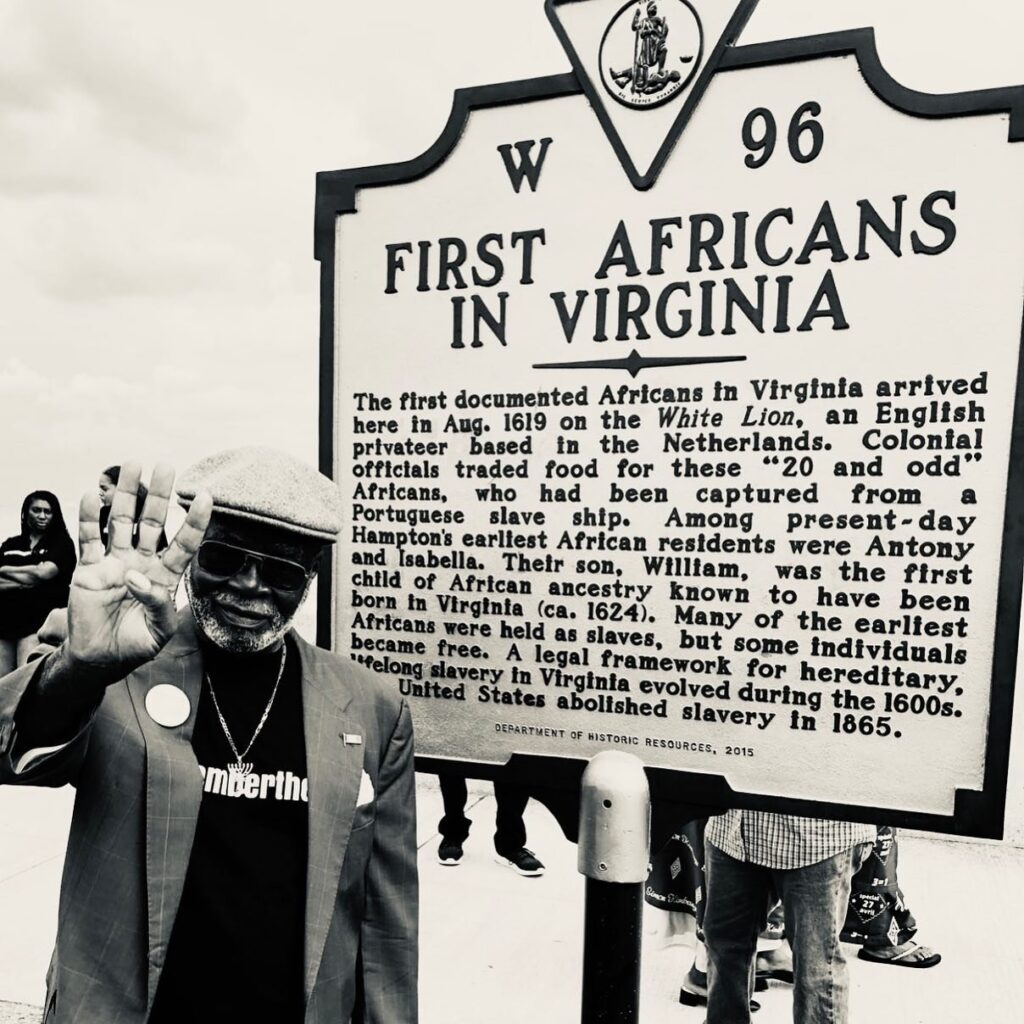
In late August 1619, the privateer White Lion arrived at Point Comfort in present-day Hampton, Virginia, carrying more than twenty captive Africans taken from the Portuguese slave ship São João Bautista. They had been seized from the kingdom of Ndongo in west-central Africa. Their arrival became a defining marker in the history of people of African descent in what would become the United States.
This was not the beginning of African history in the Americas, nor was it the beginning of the transatlantic slave trade. It was, however, a pivotal moment in the development of English colonial America and the racial systems that followed.
Resistance and emancipation
Enslaved people never accepted bondage passively. Resistance took many forms: preserving family and culture, escaping, organizing, teaching, petitioning and openly rebelling. Nat Turner’s revolt began in Southampton County, Virginia, on August 21, 1831. Its aftermath was brutal, with widespread reprisals against both enslaved and free Black people and new restrictions on education and assembly.
In the British Empire, the Slavery Abolition Act received Royal Assent on August 28, 1833, and took effect on August 1, 1834. The law abolished slavery across most British colonies, although many formerly enslaved people were forced into an exploitative apprenticeship system until 1838. August 1 is now marked as Emancipation Day in numerous Caribbean countries and communities throughout the diaspora.
Canada also forms part of this story. In 1793, Lieutenant-Governor John Graves Simcoe supported legislation limiting slavery in Upper Canada. Decades later, British North America became an important destination for people escaping slavery through the Underground Railroad.
August and civil rights
August continued to carry major moments in the fight for equal citizenship. On August 28, 1963, the March on Washington brought hundreds of thousands of people together for jobs and freedom, and the Reverend Dr. Martin Luther King Jr. delivered his “I Have a Dream” address. On August 6, 1965, President Lyndon B. Johnson signed the Voting Rights Act, prohibiting discriminatory barriers that had denied Black Americans meaningful access to the ballot.
These victories were not gifts from institutions. They were achieved through generations of organizing, sacrifice, public advocacy and coalition-building.
The 400-year commemoration
In 2018, the United States enacted the 400 Years of African-American History Commission Act to support programs commemorating the 1619 anniversary. In August 2019, Remember The 400 partnered with the City of Hampton, Virginia, on two major cultural events. I AM MORE was a youth-led celebration of the contributions of enslaved Africans and their descendants through music, dance, poetry, theatre and spoken word. The Journey, written and directed by founder Shadrock Porter, presented this history through an original theatrical production at the American Theatre.
Toronto also proclaimed August 2019 as Emancipation Month, connecting the city’s public remembrance to the histories of abolition in Upper Canada and the British Empire.

Why Freedom Month matters now
Freedom is more than the ending of a law. It includes the ability to learn one’s history, participate fully in civic life, support one’s family, develop young leaders and build institutions that serve the community. Remember The 400 therefore connects historical remembrance with practical work: food distribution, youth development, public education, cultural celebration and community partnership.
August gives communities in Canada, the Caribbean, the United States, Britain and beyond a common period in which to honour those who resisted slavery, recognize the progress achieved, confront work still unfinished and celebrate the resilience of the African diaspora.
A month to remember, celebrate and serve
The case for August as Freedom Month rests on both history and purpose. The month contains pivotal milestones in enslavement, emancipation and civil rights. More importantly, it offers a positive international framework for education, unity and service. We remember the struggle for freedom so that we can use freedom responsibly—together.
August historical timeline
This selected timeline restores the broader historical sweep of the original essay while correcting disputed dates and adding important milestones from Africa, the Caribbean, Canada, Britain and the United States.
- Late August 1619: More than twenty captive Africans arrive at Point Comfort, Virginia, aboard the White Lion.
- August 30, 1800: A major planned uprising led by Gabriel in Virginia is disrupted by weather and betrayal.
- August 21, 1831: Nat Turner’s revolt begins in Southampton County, Virginia.
- August 28, 1833: Britain’s Slavery Abolition Act receives Royal Assent.
- August 1, 1834: The Slavery Abolition Act takes effect across most of the British Empire.
- August 1, 1838: The apprenticeship system ends in the British Caribbean, bringing full legal emancipation.
- August 13, 1892: The newspaper that became the Baltimore Afro-American begins publication.
- August 17, 1887: Pan-African organizer Marcus Garvey is born in Saint Ann’s Bay, Jamaica.
- August 1920: Marcus Garvey’s Universal Negro Improvement Association holds its landmark international convention in New York.
- August 9, 1936: Jesse Owens wins his fourth gold medal at the Berlin Olympic Games.
- August 28, 1955: Fourteen-year-old Emmett Till is murdered in Mississippi; the public response becomes a catalyst for the modern civil-rights movement.
- August 1960: A historic wave of African independence includes Benin, Niger, Burkina Faso, Côte d’Ivoire, Chad, the Central African Republic, the Republic of the Congo, Gabon and Senegal.
- August 6, 1962: Jamaica becomes independent.
- August 31, 1962: Trinidad and Tobago becomes independent.
- August 28, 1963: The March on Washington for Jobs and Freedom takes place, and Dr. Martin Luther King Jr. delivers his “I Have a Dream” address.
- August 6, 1965: The Voting Rights Act is signed into law in the United States.
- August 11, 1965: The Watts uprising begins in Los Angeles, exposing deep inequality and community frustration.
- August 30, 1967: Thurgood Marshall is confirmed as the first Black justice of the United States Supreme Court.
- August 30, 1983: Guion Bluford becomes the first African American to travel into space.
- August 28, 2008: Barack Obama accepts the Democratic presidential nomination, becoming the first Black nominee of a major U.S. political party.
- August 9, 2014: The killing of Michael Brown in Ferguson, Missouri, intensifies an international movement for racial justice and police accountability.
- August 2019: Remember The 400 and partners hold major 400-year commemorative programs in Hampton, Virginia, while Toronto proclaims Emancipation Month.
- August 1, 2021: Canada marks the first federally recognized Emancipation Day following Parliament’s unanimous designation.
- Every August 23: UNESCO observes the International Day for the Remembrance of the Slave Trade and its Abolition.
Editor’s note: This version preserves the central argument of C. D. Ford’s June 2020 essay while correcting grammar, chronology and several historical details. Historical references include the U.S. National Park Service, UK Parliament, the U.S. National Archives and Congress.gov.